Professional micro-gestures
Welcome education professionals!
This Mindly highlights the central role of professional micro-gestures in building the educational relationship. Looks, postures, listening gestures, intonation, and space management constitute a powerful non-verbal language that influences the classroom climate, emotional safety, and student engagement. Research in social psychology and neuroeducation shows that these subtle signals contribute to emotional co-regulation and support learning. By developing a fine awareness of their micro-gestures, professionals can prevent tensions, enhance motivation, and establish a calm authority. Non-verbal communication thus becomes a true pedagogical tool in the service of a respectful and secure relationship.
Key words of the Mindly
|
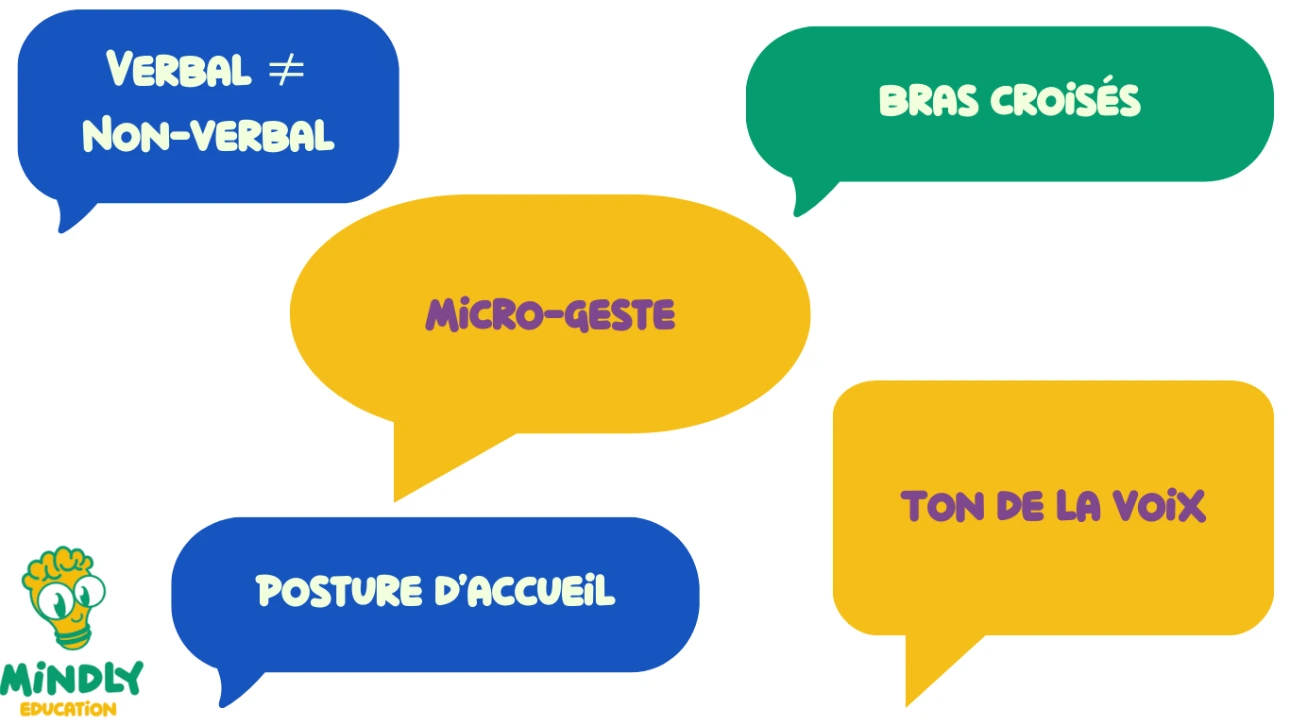
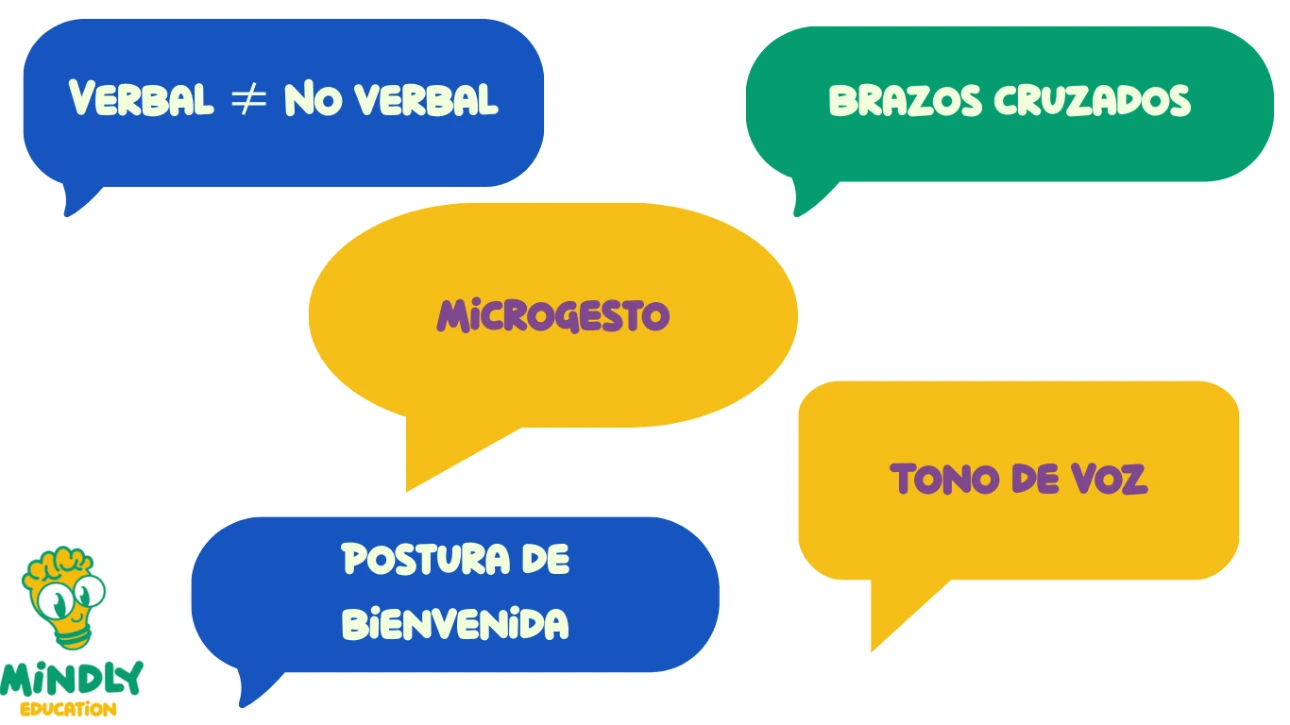
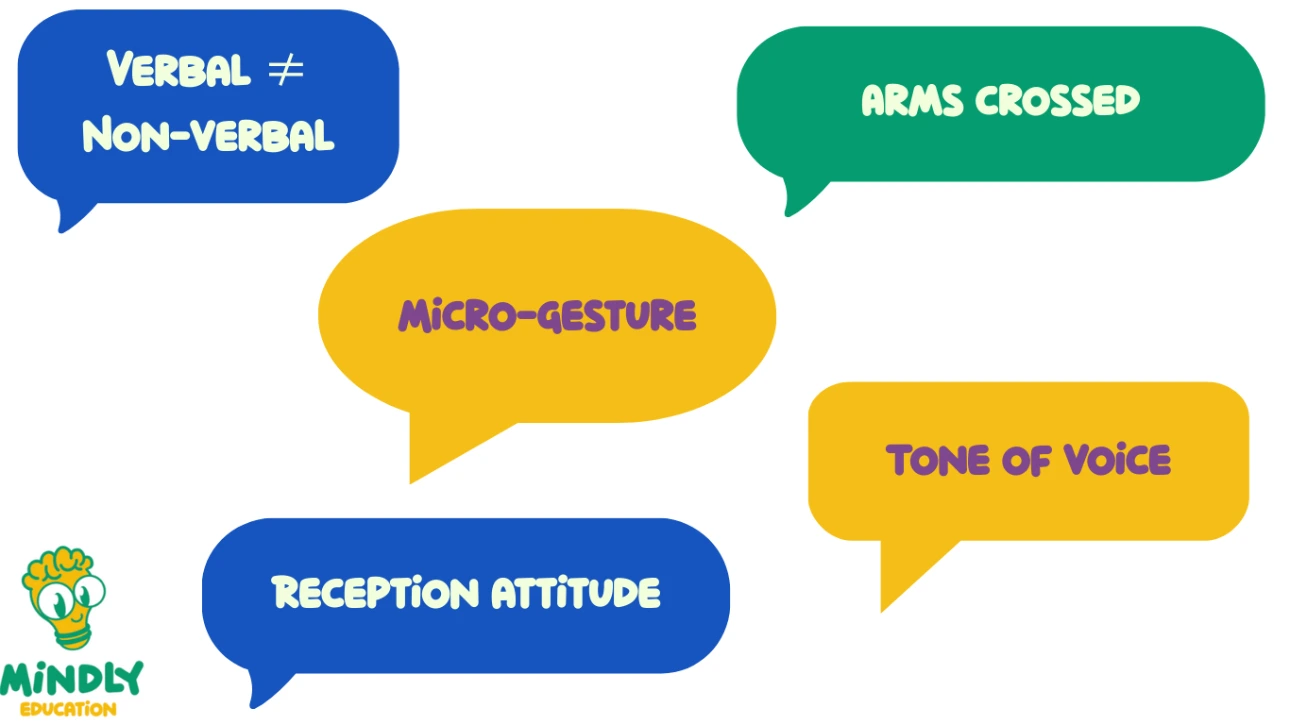
Verbal ≠ Non-verbal |
The verbal: the words. The non-verbal: everything that accompanies or replaces the words. The non-verbal plays a major role in communication with children. They remember your body language more than what is said. |
|
Arms crossed |
Arms
crossed - what does this gesture say in non-verbal communication: the gesture of
crossed arms is highly symbolic in non-verbal communication. |
|
Tone of voice |
The tone of voice is a key element of non-verbal communication that profoundly influences how a message is received and interpreted. A teacher who speaks in a monotone voice without modulation limits the attention of the students. |
|
Micro-gesture |
Micro-gesture: small movement, big communication. A micro-gesture is a very small involuntary or very discreet movement of the face or body. It often conveys an emotion or a hidden thought that the person does not verbalise. |
|
Welcoming posture |
Welcoming posture: a powerful tool in communication and relationships. |