The principles of neuroeducation
Welcome education professionals!
Learn, grow, succeed together! Discover how to support each child with kindness and effectiveness, from play to learning. Practical advice for teachers, facilitators, and educators who want to make a difference today.
Thekeywordsof Mindly
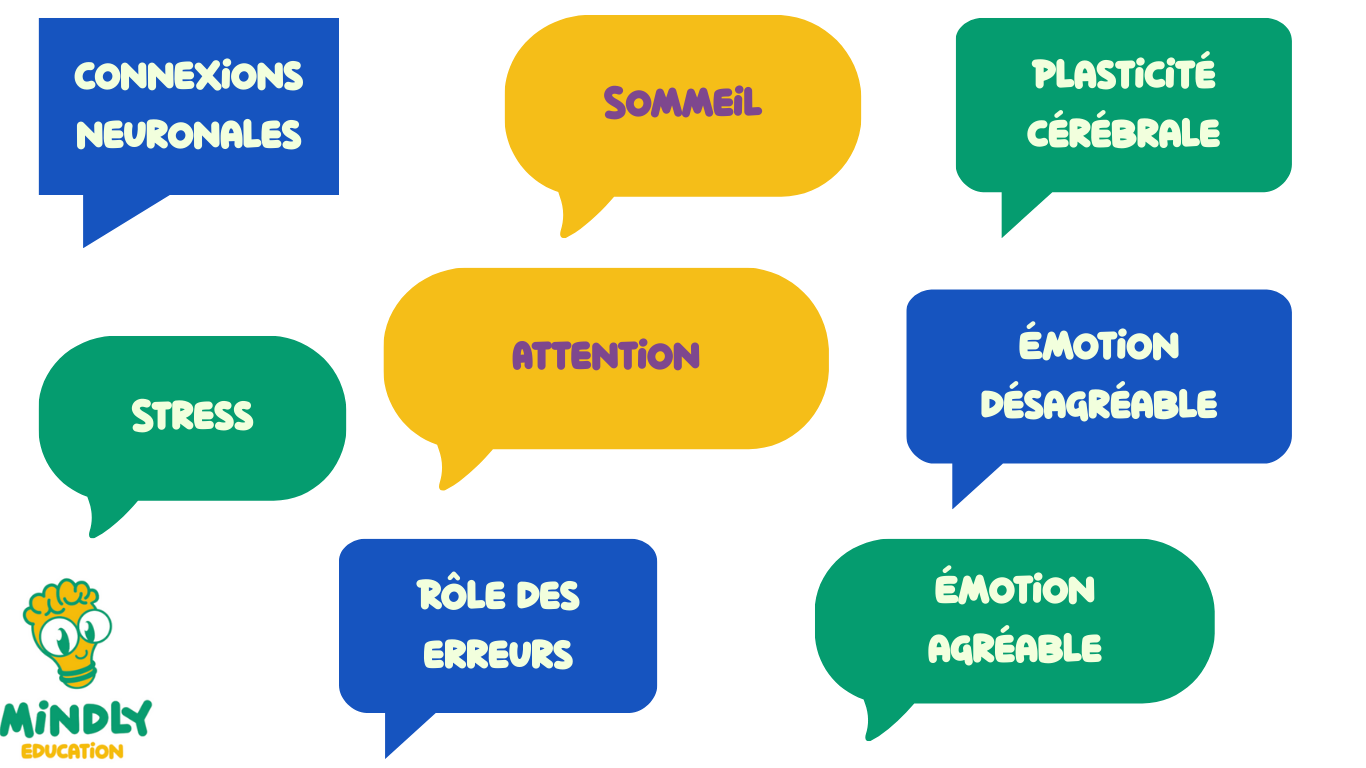
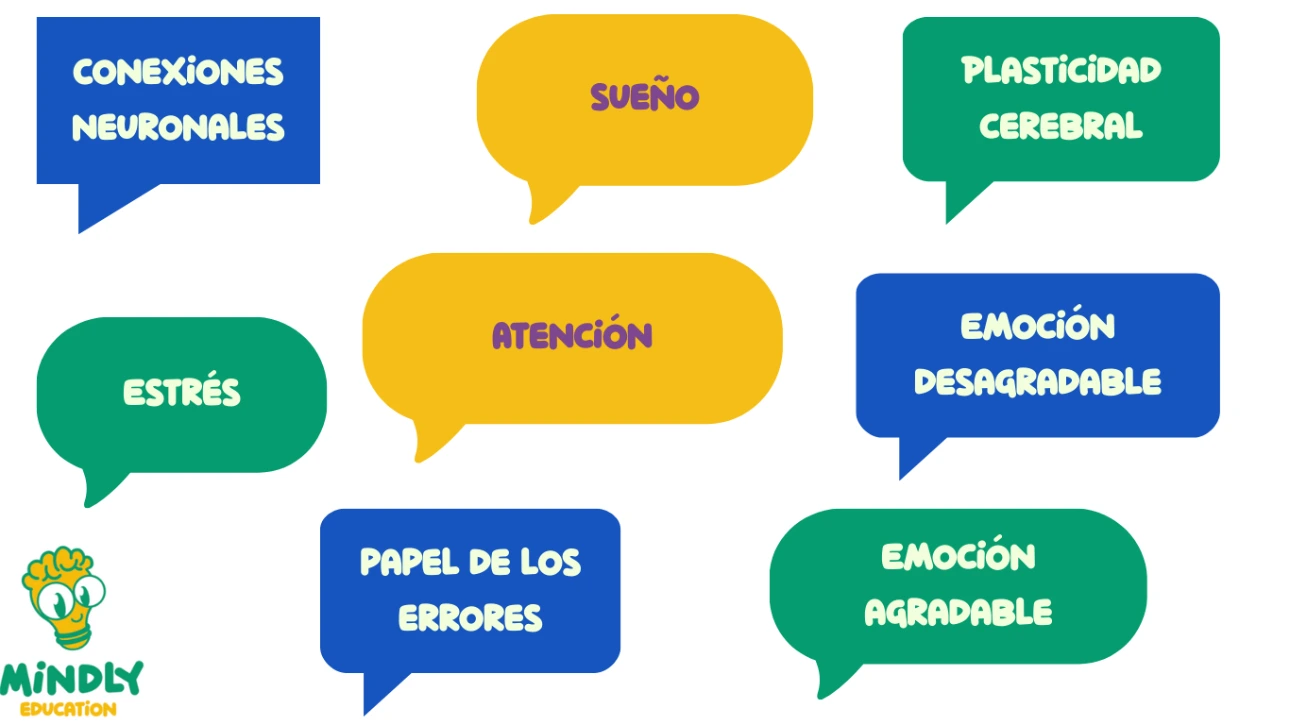
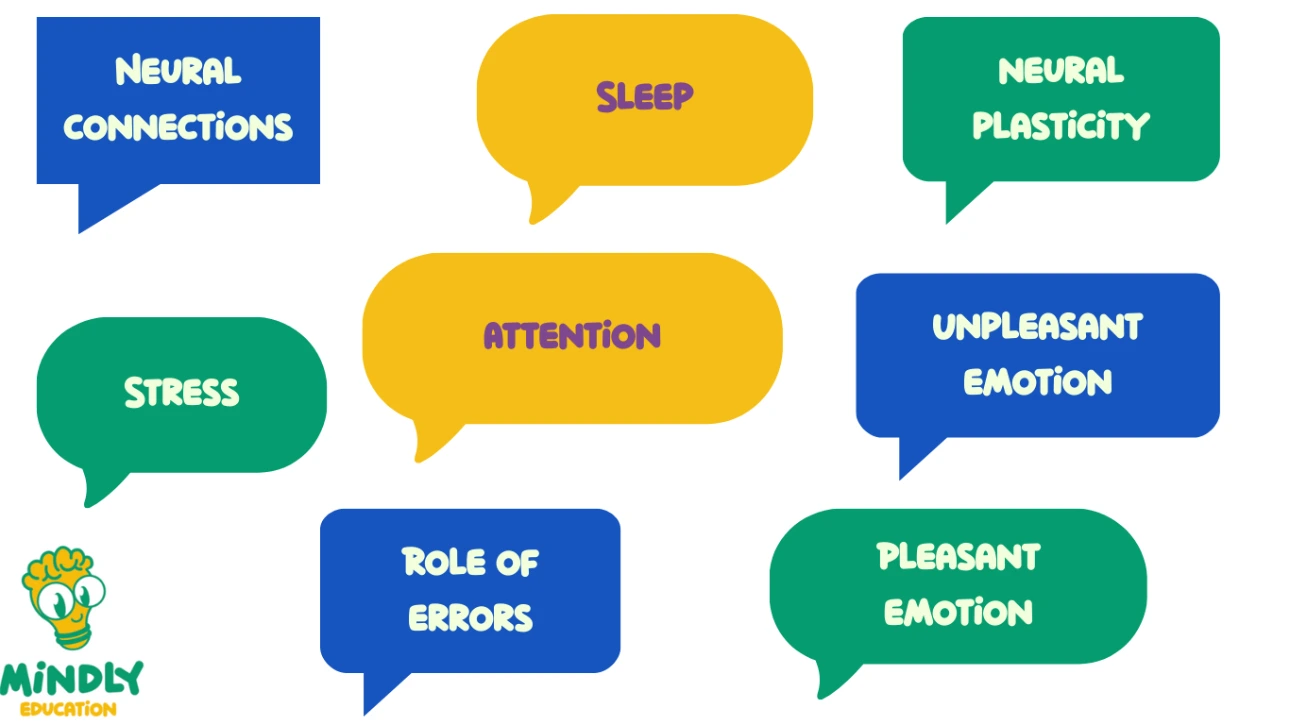
Neuronal connections:Neuronal connections are essential for the functioning of the brain and the transmission of nerve information. The repetition of information or a concept helps to strengthen neuronal connections in the brain.
Stress: Stress can hinder learning, especially if it is intense or repeated, as it disrupts attention, concentration, and working memory through the release of hormones like cortisol, thus blocking the integration of new information. Moderate stress can be stimulating, but excessive stress creates a "fog" in the mind, making assimilation difficult and potentially leading to the forgetting of knowledge that has been mastered, creating a vicious cycle.
Sleep: Sleep and breaks are important elements for consolidating knowledge learned during the day.
Brain plasticity: Brain plasticity means that the brain can change and adapt based on learning.
Attention: Attention plays a key role in learning and must be captured proactively.
Role of mistakes: Errors are part of the learning process and help to adjust neural connections.
Unpleasant emotion: Emotions perceived as unpleasant, such as stress, fear, and shame, can negatively affect learning.
Pleasant emotion: A positive emotional environment facilitates memorisation and learning.