I listen to my child with empathy
Welcome parents!
This Mindly video shows you how to listen to your child with empathy and kindness. Discover simple techniques such as silence, rephrasing, and questioning to better understand them. Learn to value their strengths and needs while establishing clear boundaries. Active listening builds trust, improves communication, and prevents conflicts. You will be able to, transform your exchanges and create a more peaceful and fulfilling relationship.
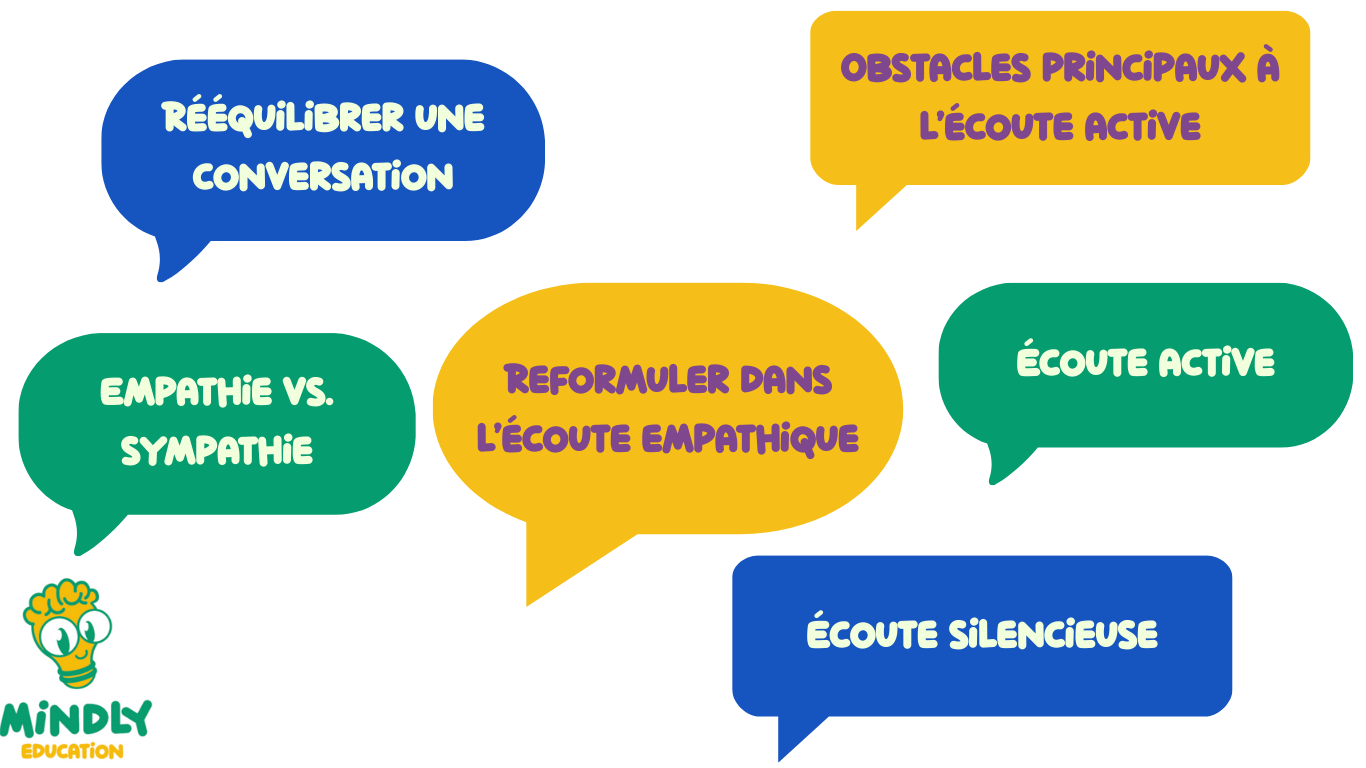
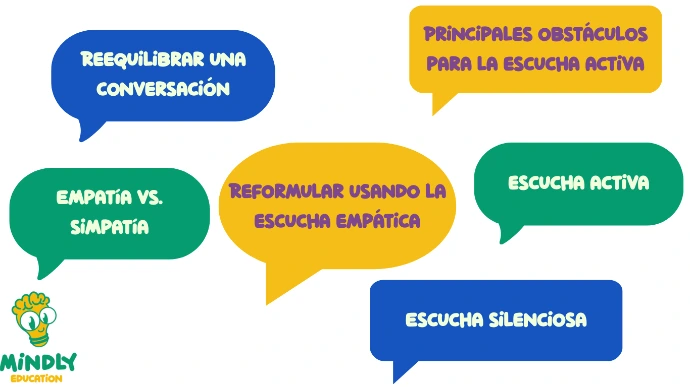
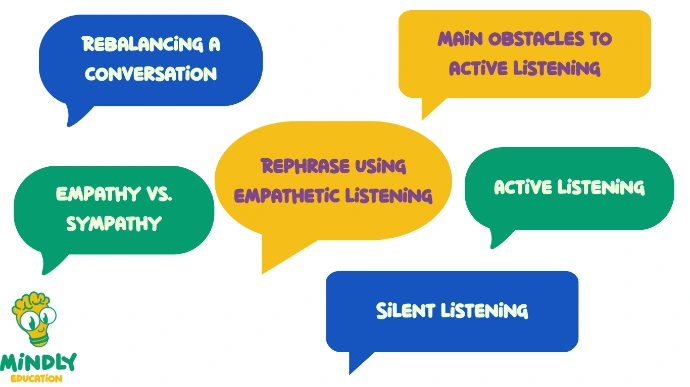
The key words of Mindly
Active listening
Active listening is a way of listening with attention, empathy, and without judgment. It means being fully available to welcome what the other person says, thinks, or feels, with respect.
Empathy vs. sympathy
The terms empathy and sympathy refer to two different ways of relating to the emotions of others. Sympathy involves feeling the other person's emotions (compassion), while empathy involves feeling with the other, understanding what they are experiencing internally.
Main obstacles to active listening
Lack of patience and distraction.
Rebalancing a conversation
Ask open-ended questions; this gives the other person a voice and encourages them to express themselves.
Silent listening
Silent listening is a form of listening where one is fully present and attentive to the other, without interrupting, speaking, judging, or necessarily reacting verbally.
Rephrasing in empathetic listening
Reformulation is a pillar of empathetic listening. It involves restating in one's own words what the other person has expressed, to show that we have understood their thoughts and especially their emotions.