I find my place with children
Pathy - Empathy - Sympathy
Welcome education professionals!
Finding the balance between emotional listening and adult posture promotes effective and respectful support.
|
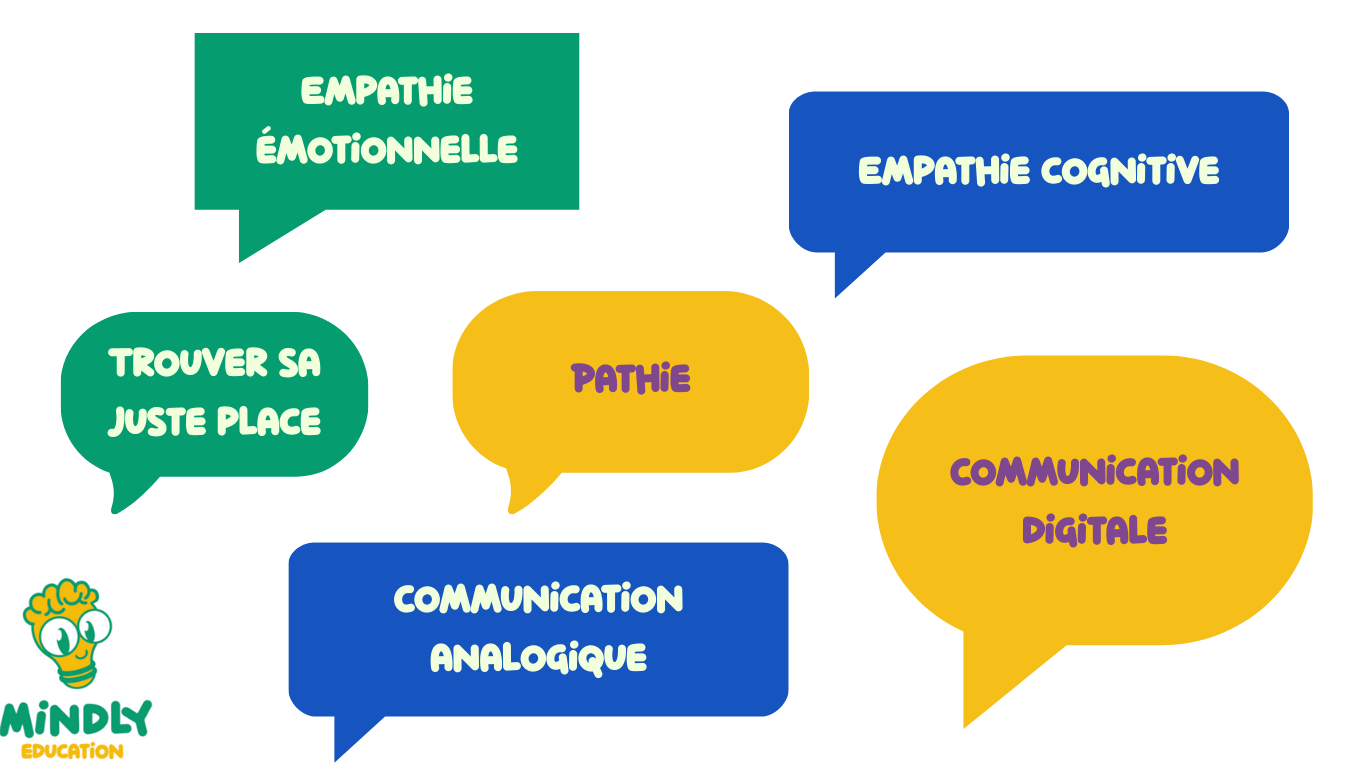
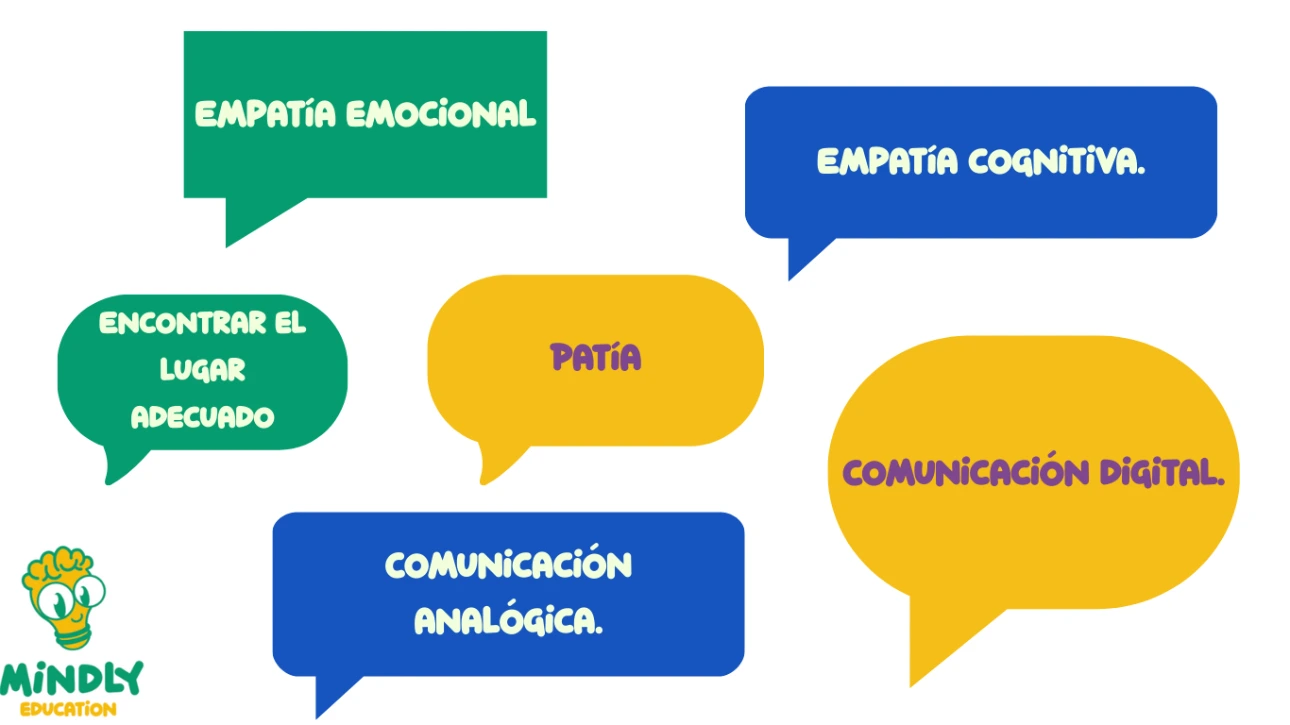
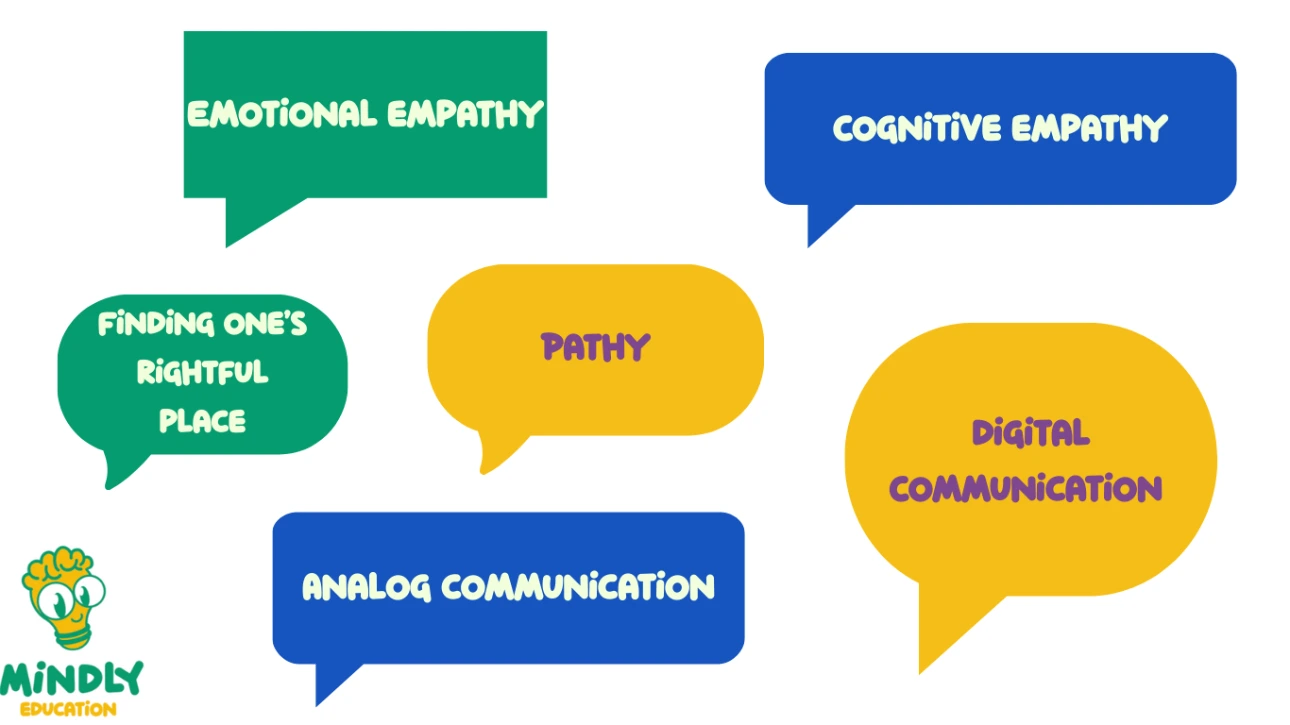
Pathy |
The suffix -pathy comes from the Greek "pathos," which means suffering, emotion, or feeling. |
|
Emotional empathy |
Emotional empathy refers to the ability to directly feel the emotions that another person is experiencing, as if we were experiencing them ourselves. |
|
Cognitive empathy |
Cognitive empathy is the ability to intellectually understand what another person is feeling, without necessarily feeling their emotions ourselves. |
|
Finding your rightful place |
Finding your rightful place means understanding and accepting your role, your limits, and your needs in the professional context, in order to feel balanced, respected, and in your rightful measure. |
|
Digital communication |
Verbal communication encompasses all exchanges that occur through spoken or written language. It is the most explicit and direct form of communication. |
|
Analogical communication |
Analogical communication refers to messages transmitted without words, through non-verbal signs: gestures, postures, facial expressions, intonation, gaze … |