The posture of responsibility
Welcome parents!
This Mindly video helps you clarify your role as a parent in relation to your child. Discover how to combine kindness and a stable framework, without authoritarianism or excessive permissiveness. Learn to set clear boundaries and make decisions with confidence to secure your child. A responsible posture promotes your child's autonomy, serenity, and confidence. By adopting a balanced position, you can build a more harmonious parent-child relationship.
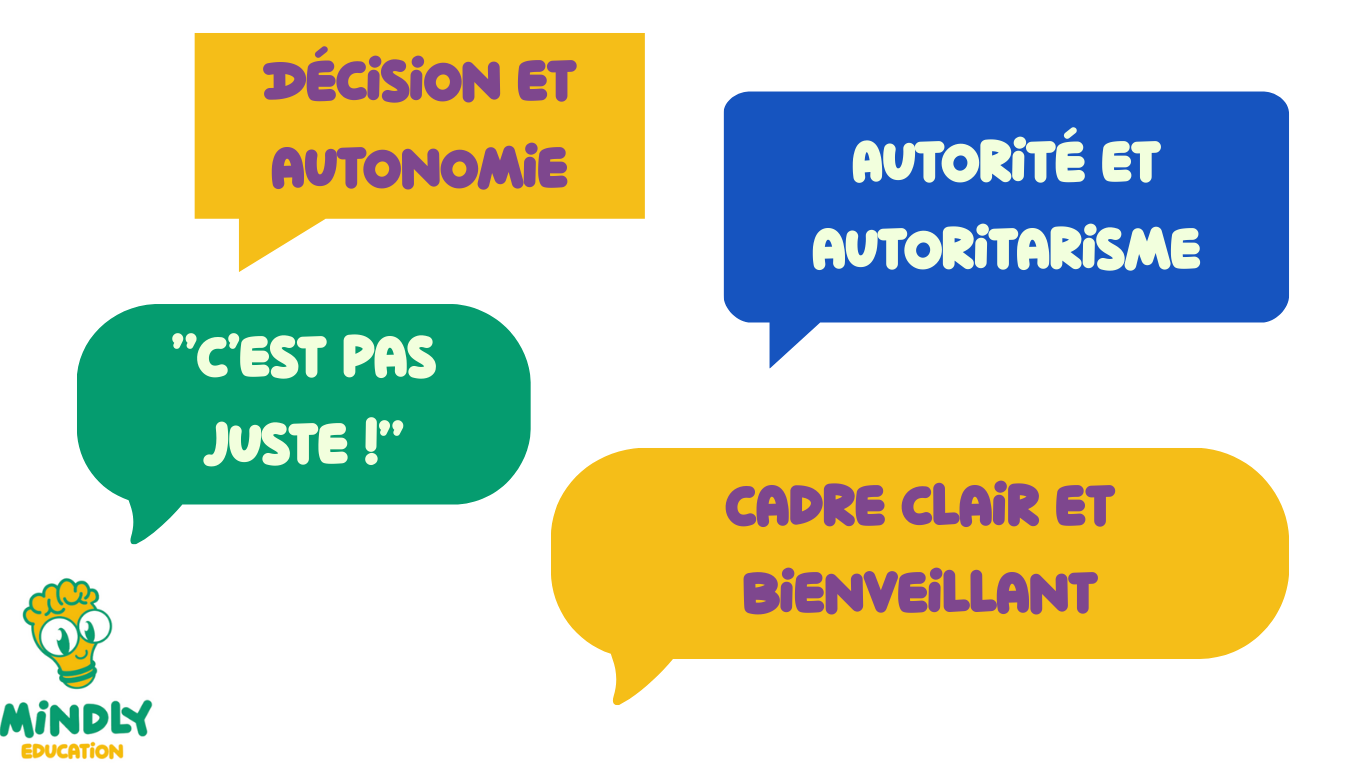
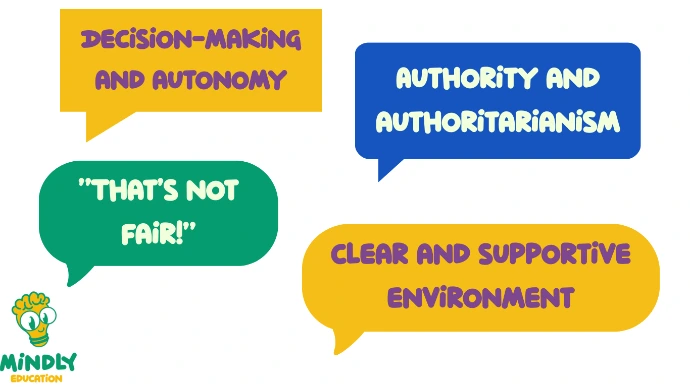
The key words of Mindly
Decision and autonomy
Autonomy is built
within a clear framework, not through a lack of reference points.
Decision-making is
one of the skills in developing autonomy. When a child
makes choices, they develop their self-confidence + learn to think for
themselves + gradually take responsibility for their actions + strengthen
their sense of responsibility.
Authority and
authoritarianism
Authority frames in
a fair and clear manner, while authoritarianism imposes without dialogue.
An authoritative adult
allows the child to feel safe + understand the rules of
cohabitation + develop autonomy and moral sense.
An authoritarian adult,
on the other hand, often generates fear, withdrawal, rebellion or dependence + prevents
the student from thinking for themselves + creates a tense and uncooperative classroom or family environment.
"It's not fair!"
What this phrase
"It's not fair" hides. When a child says "It's
not fair", it is not necessarily a whimsical demand. It is often a spontaneous expression of frustration, misunderstanding, or emotional hurt. Behind "It's not fair", there is a need for fairness + a desire for recognition + a social comparison (often with other children) + sometimes a feeling of powerlessness.
Clear and supportive framework
A clear and supportive framework is a reassuring structure: explicit, consistent, and constant rules + a climate of respect and listening: the rules are not imposed rigidly, but set with educational intent and dialogue. The child needs limits to feel free inside.