The mirage goals
Welcome parents!
This Mindly capsule helps you decode your child's difficult behaviours. Discover the “mirage goals”: the hidden messages behind their anger, refusalsorprovocations. Learn to respond with calm and empathy to strengthen trust and cooperation. Simple strategies to support your child while avoiding unnecessary conflictsand build a more serene and fulfilling relationship.
The key words of Mindly
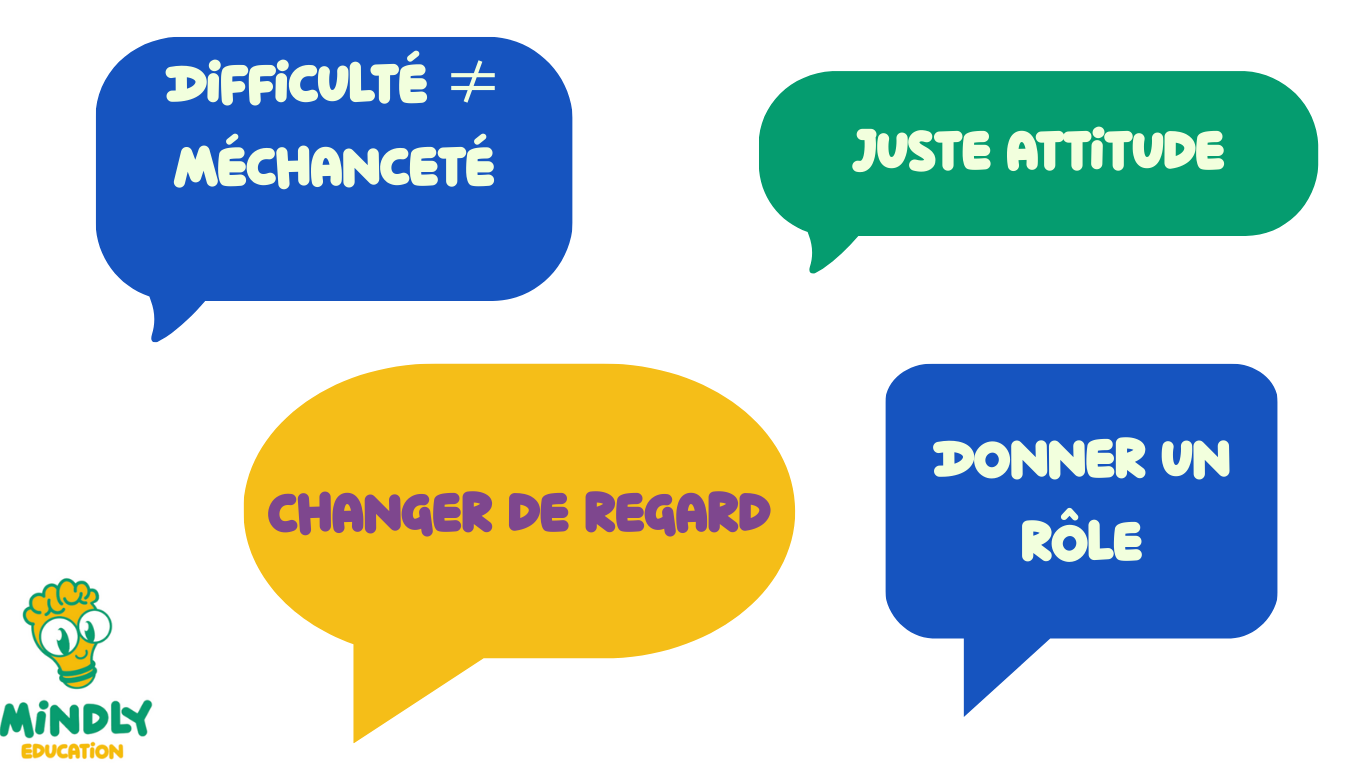
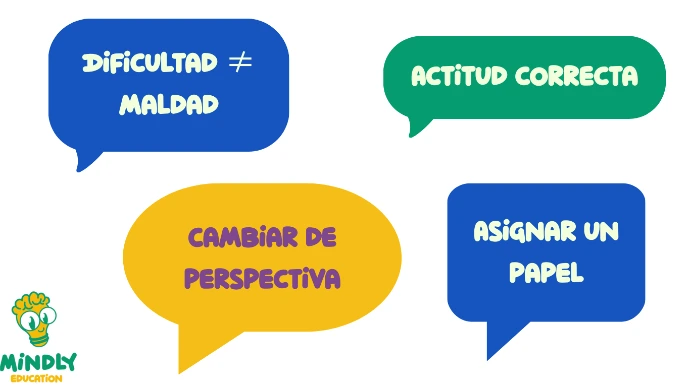
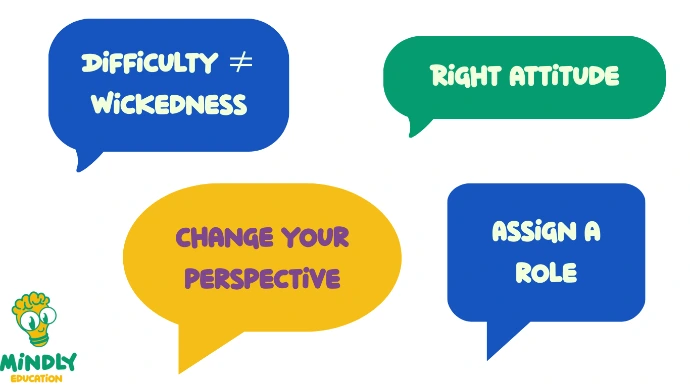
Difficulty ≠ malice
The idea that
"difficulty = malice" is a common misinterpretation,
especially among adults faced with disruptive behaviours
in children (or even in teenagers).A difficult behaviour
is not a personal attack. A young person who misbehaves is not necessarily “naughty”, they are often in
pain, distress or difficulty.
Giving a role
Assigning an active role to
a student helps to strengthen their sense of usefulness in the group +
Stimulate their motivation and concentration + Encourage autonomy and
responsibility + Value their skills (even subtle or social) +
Improve the classroom climate through structured cooperation.
Correctness is not the same response for everyone, but a response tailored to each individual's needs.The right attitude refers to the balanced inner and relational posture of the adult (teacher, parent, educator), which combines Clarity of expectations and framework (demand) + Listening, empathy and respect for the child's pace (kindness) + Consistency between words, actions and intentions (alignment).
Change of perspective
"Everything starts from the perspective" - This phrase is at the heart of positive pedagogy, caring education and relational management.
Changing perspective means opening the door to listening, understanding… and therefore to true, lasting and respectful cooperation.