The impact of my cognitive biases
Welcome education professionals!
This Mindly invites education professionals to become aware of the impact of labels and cognitive biases on their posture and practices. Automatic judgments influence expectations, interactions, and can confine students to limiting roles. Drawing on the Pygmalion and Golem effects, it shows how adult expectations shape behaviours and performances. Adopting a reflective and caring posture allows for the neutralisation of these biases and ensures greater equity. Each student can then evolve freely, without being reduced to a label.
The keywords of Mindly
|
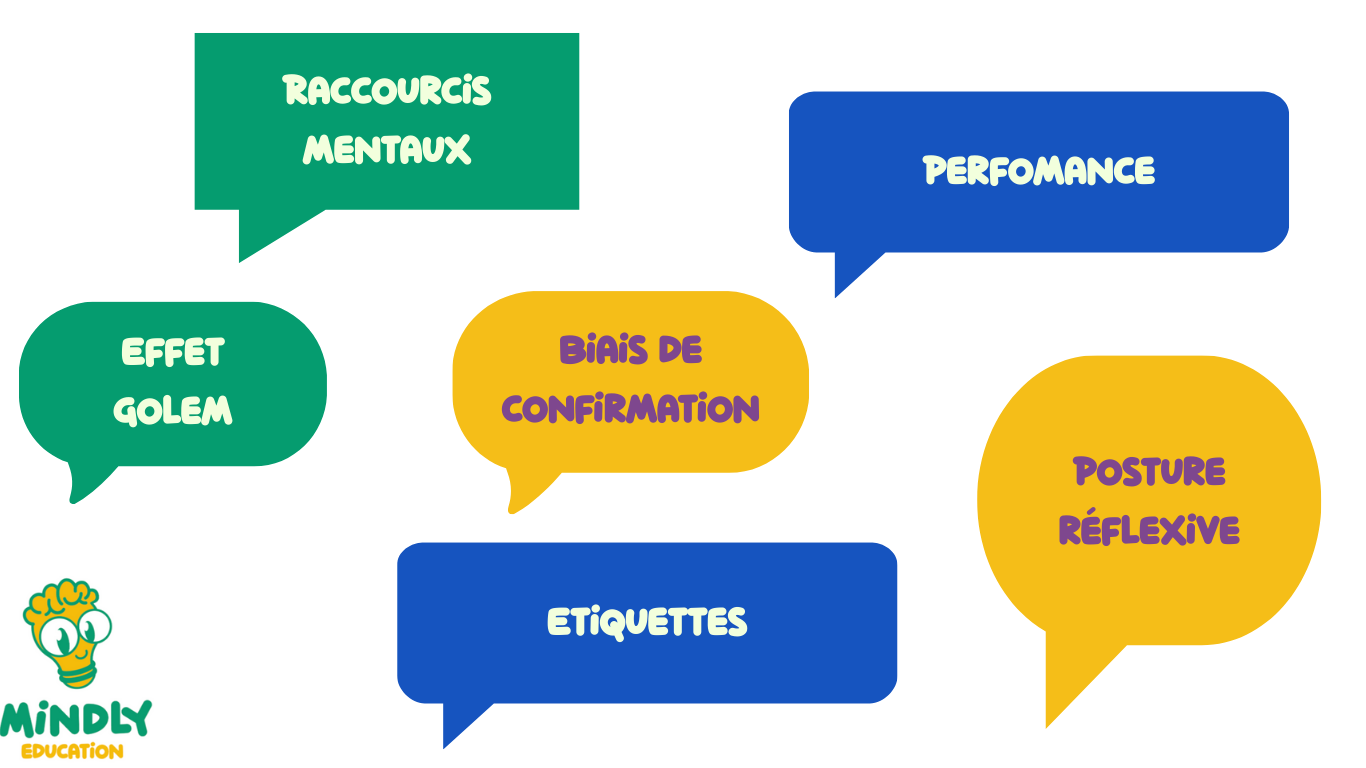
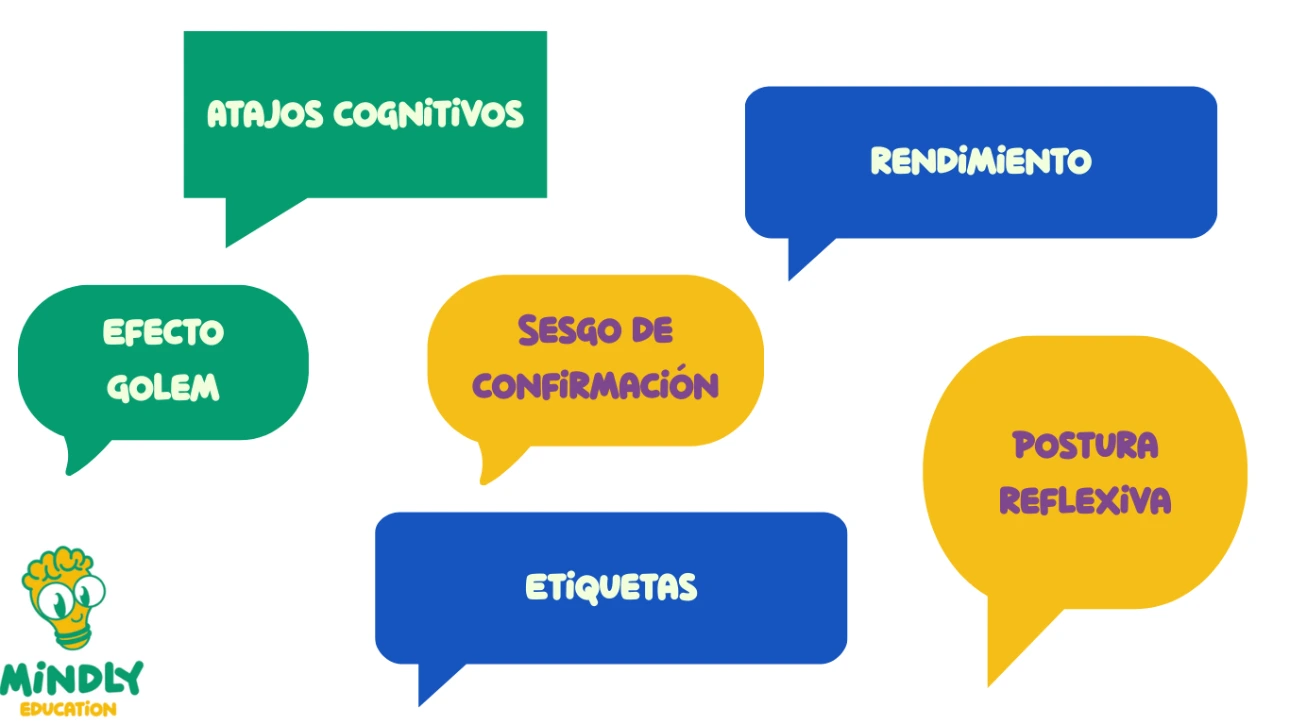
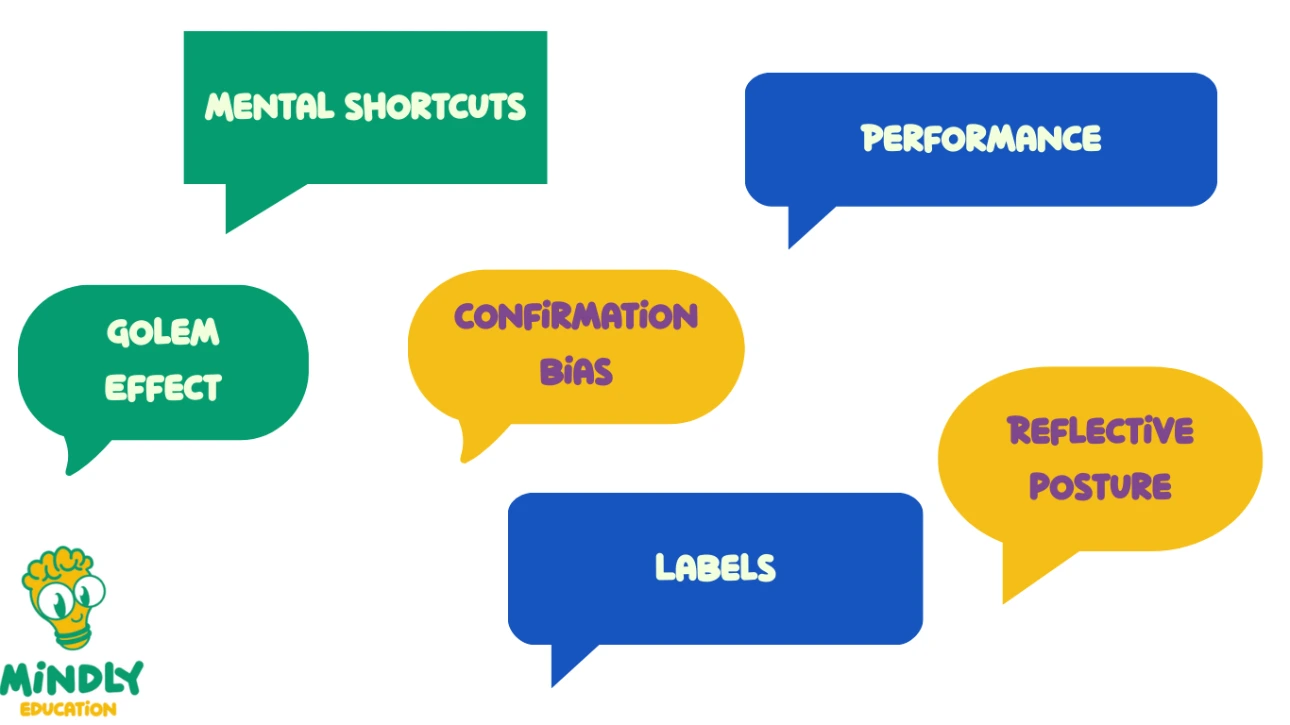
Mental shortcuts |
Cognitive biases or mental shortcuts are errors in reasoning or judgment that affect our perception, memory, and decision-making. |
|
Performance |
The Pygmalion effect shows that high expectations from adults can improve young people's performance. |
|
Confirmation bias |
Confirmation bias is a cognitive bias that involves favouring information that confirms our pre-existing beliefs or hypotheses, while ignoring or minimising information that contradicts them. This phenomenon is often unconscious and can influence our decisions, judgments, and behaviours. |
|
Golem effect |
The Golem effect is a psychological phenomenon that describes how negative expectations towards a person can unfavourably influence their behaviour and performance. |
|
Labels |
Labels, in the psychological and social context, refer to the labels or judgments that we assign to individuals or groups. These labels can have significant effects on behaviour, self-esteem, and social relationships. |
|
Reflective posture |
A reflective professional posture involves questioning one's own judgments to avoid stigmatizing students. |